Labels

Showing posts with label Indian festivals and cultures. Show all posts

Friday, 26 August 2016

Amazing facts about Ganesh Chathurthi !!

Lord Ganesh


Ganesh Chaturthi, also known as Vinayaka Chaturthi is one of the most auspicious festivals celebrated throughout India with a great spirit and exuberance. This day symbolizes the birth day of Lord Ganesh, the elder and most beloved son of Lord Shiva and Mata Paarvati.

The celebration of this divine festival begins on the fourth day of the waxing moon period, “Shukla Chaturthi” and culminates on the fourteenth day which is known as “Anant Chaturthi”.

This festival is celebrated by Hindus with a great devotion and enthusiasm. On the last day of the festival the idols are ordained with red emollient or sandal paste and taken out publicly in Pandaals, hymns and mantras are sung by the priests throughout the way, prasad is distributed among-st the devotees and then finally immersed traditionally into the holy water bodies.

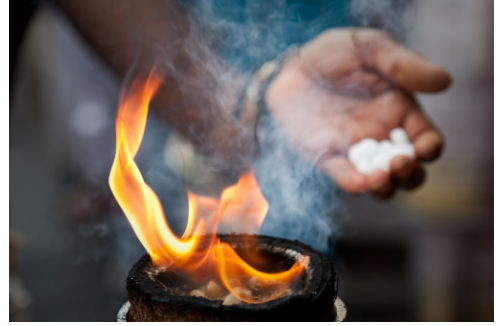
A priest performing rituals of the ceremony


Here are some interesting facts about Ganesh Chaturthi that will blow your mind!!
Fact 1: The unknown significance of Ganesh Chaturthi
Ganesh Chaturthi is also the day of proclamation as Lord Shiva declared Ganesha to be superior of all Hindu Gods.

Fact 2: Lord Ganesha and his multiple names
Lord Ganesha is addressed by about 108 names in total.
The most common name by which lord Ganesha is addressed by is Vinayaka.
The other important names are:
‘Vighna Harta'-the remover of obstacles
'Buddhi Pradaayaka' -the provider of wisdom and intellect


Fact 3: Ek dant-the one with only one tusk.
An interesting story lies behind this term ‘Ek dant’. According to Hindu mythology, Ganesha while having ride on His mouse during childhood; the moon observed Him from the sky and made fun of His belly. Angered by this remark, He broke his tusk and tossed it on the moon cursing the moon that no one would ever glance it on His birthday!! Although the curse was undoomed but still it is considered inauspicious to glace moon on Ganesh Chaturthi.

Fact 4: Lord Ganesha has four hands
Rope in upper left hand-to pull the devotees towards the Truth
Axe in upper right hand-to cut the attachment of devotees with pluralism of world
Rice balls in lower left hand-as a reward to devotees for amends
Gesture Of courage in lower right hand-to protect the devotees from the hurdles of life
Fact 5: Lord Ganesha’s marital status
Most people consider Lord Ganesha to be bachelor. Only a few know the fact that He had two wives-Ridhi and Sidhi who were created by Lord Brahma.
Fact 6: The first public celebration
The public celebration of Ganesh Chaturthi has its roots in the era of the great Maratha ruler Chhatrapati Shivaji, who promoted the culture in 17th century.


Fact 7: Struggle for public celebration during the battle for independence


In the 19th century, during our struggle for independence, the ban on the public celebration by the British rulers was revived by the freedom fighter Lokmanya Tilak who also bridged the gap between Brahmins and non Brahmins and strengthened the bond between them.


Fact 8: The first person who installed Lord Ganesha’s idol publically was Bhausaheb Laxman Javale.


Fact 9: The celebration and the environmental issues

In early days, this festival was celebrated by using Eco friendly, mud made Ganesha idols. But sadly, nowadays the idols made with P.O.P (Plaster of Paris) are being used which are contributing to high dose of water pollution.


Fact 10: The duration of ceremony of Ganesh Chaturthi

The duration of ceremony of Ganesh Chaturthi varies in different areas depending upon place and its culture. The maximum celebration takes place in Andhra Pradesh and Maharashtra which is for for 10 days.  Where as in other parts of India, it is celebrated only for one day. The celebration also takes place in other parts of world  like Thailand, Cambodia, Indonesia, Afghanistan, Nepal and China.

Fact 11: The main ceremonies of the festival


The four main ceremonies of the festival are-

Pranapratishhtha – infusion of the deity into idol

Shhodashopachara - 16 forms of paying homage to Ganesha

Uttarpuja –the prayer before the immersion of idol into water bodies

Ganpati Visarjan - immersion of the Idol in the water bodies. 


Ganpati Visarjan


Fact 12: The offerings of ceremony

21 'modakas' (rice flour preparation)

21 'durva' (trefoil) blades
Rakta chandan
Coconut
Jaggery
Red flowers
Modaks

Fact 13: The sources of hymns
Vedic hymns- Rig Veda and Ganapati Atharvashirsha Upanishad
Ganesha stotra- Narada Purana

Every year, the devotees celebrate this festival wholeheartedly to be showered with blessings of knowledge and wisdom, chanting:
"Ganapathi Bappa Morya, Purchya Varshi Laukariya"
(O father Ganesha, come again soon next year). 


Sunday, 21 August 2016

Janmashtami in twin cities of Mathura and Vrindavan


Janmashtami also known as Gokul Ashtmi, Sree Jayanti, Saatam Aatham or Ashtami Rohini is one of the most popular Indian festivals among Hindus. Janmashtami is a fusion of two words: Janma (birth) and Ashtami (eight). The month of August-September (Bhadrapad) in Hindu calendar on the eighth day of dark fortnight marks the birth of Sri Krishna-the eighth reincarnation of Lord Vishnu. Owing to his sharp-witted and cheerful nature, he became more of a friend and guide to most of his devotees unlike other Gods.

There was a prediction that Kansa, the ruler of Yadav province ‘Mathura’ would be killed by the eighth son born to his sister Devaki. To escape from this premonition, Kansa imprisoned his sister and her husband-Vasudeva and killed all the six children born to Devaki. Their seventh child Balram was handed to Rohini under cover. The night their eighth child Krishna was born, Vasudeva broke out from the prison and handed over the child to Nanda and Yashodha in Gokula.

Although Janamashtmi is celebrated in almost all parts of India but in Mathura and Vrindavan, it is celebrated with much more zeal and enthusiasm. Mathura is the birthplace of Lord Krishna and Vrindavan was the place where Lord Krishna performed ‘Rasleelas’ with Gopis.
All the temples are magnificently decorated. The grand celebration is held in Dwarkadhish temple where the ritual of giving holy bath to Krishna with milk and curd is performed. The voice of prayers and devotees chanting hymns echoes in the air.  Several pujas and religious ceremonies are also held all throughout the day. After prayer, Panchamrit (mixture of honey, gangajal, curd and ghee) and Prasad is distributed to the devotees. The devotes who have kept fast;  break their fast with this Prasad. ‘Jhulanotsava’, several natyas (dramas) and Rasleelas (dance performances)  are  also organized all over the city. Besides this, the act of breaking earthen pots is performed  depicting the memories of childhood of Krishna. The earthen pots are filled with curd and butter and hung up over the streets. The young men climb on each other’s shoulders, form pyramids and try to break the pots.
Sri Radha Raman Mandir
Varindavan- There are over 4000 temples of Vrindavan where all the ceremonies and rituals of Janamshtmi are held. A few of them are ISKCON temple, Ranganathji Temple and Radharaman Temple. 

Madhuban is an area in Vrindavan near the Yamuna River There is a temple in the middle of Madhuban forest which is considered to be the place where ‘Rasleelas’ were performed by Krishna with his Gopis and also a separate room is there where Radha and Krishna take rest after dancing. The people of Vrindavan believe that Krishna and Radha still appear every night and play Raasleela in a Madhuban forest. 

There also has been a Hindi song on this folklore:
“Madhuvan Main Jo Kanhaiya Kisi Gopi Se Mile
 Kabhi Muskaaye,  Kabhee Chhede, Kabhee Baat Kare
 Radha Kaise Na Jale, Radha Kaise Na Jale
”


The ‘Madhuban forest’  is full of trees and monkeys. Those trees are connected to each other and are believed to be lord Krishna and Radha. People say that all trees become Gopis at night; and monkeys and all other insects disappear away. Till date, no one has ever witnessed the Raasleela of Radha-Krishna in this forest. It is believed that whosoever has even tried or entered the forest at dusk has met with fatal consequences. Some had gone mad, some never went back and some died also. Even those who had gone back were not in condition to describe what they had witnessed. Nobody knows whether it is supreme power or there is really the arrival of Radha-krishna at night.
During the day, the devotees come to worship the place. After 5 PM the temple is closed and after worshiping at 8 PM, the priest of the temple keeps brushes and water every night. In the morning, the items seem to have been used up!!

Even today, this festival is celebrated with great zeal and honor. All this is the result of devotion and faith in ‘Lord Krishna’. ‘His’ birthday is observed as a day of ‘good charm’.  The devotees regard ‘Him’ as the protector of brotherhood and savior of the whole world. 

The author Yann Martel has beautifully written the following lines in praise of Lord Krishna:
“I entered the church, without fear this time, for it was now my house too. I offered prayers to Christ, who is alive. Then I raced down the hill on the left and raced up the hill on the right—to offer thanks to Lord Krishna for having put Jesus of Nazareth, whose humanity I found so compelling, in my way."

Sunday, 14 August 2016

Celebrating 70 years of Independence of India


"If there is one place on the face of earth where all the dreams of living men have found a home from the very earliest days when man began the dream of existence, it is India."
—Romain Rolland

August 15 is an auspicious day for India; a day of pride, joy and glory. This day reminds of the priceless struggle and sacrifice of the freedom fighters for the independence of the country. Every year, Indians celebrate this day for their freedom from British colonialism. On 15th August, 1947, Pundit Jawahar Lal Nehru, the first Prime Minister of independent India; raised the esteemed tricolor national flag above Lahori gate of Red fort in Delhi.


As we all know, Saffron color symbolizes courage and sacrifice. White color symbolizes purity in thoughts and truth in speech. Green color symbolizes faith, fertility and prosperity.  24 spokes of the chakra represents noble teachings of Buddha.

Nehru delivered his famous speech ‘Tryst with destiny’ which represented the struggle of freedom fighters and future of India.

“Long years ago we made a tryst with destiny, and now the time comes when we shall redeem our pledge, not wholly or in full measure, but very substantially. At the stroke of the midnight hour, when the world sleeps, India will awake to life and freedom. A moment comes, which comes but rarely in history, when we step out from the old to the new, when an age ends, and when the soul of a nation, long suppressed, finds utterance.”

This day still holds great significance in the hearts of Indian citizens. Following the occasion of 1947, the stunning celebrations are held every year with great enthusiasm on the embankment of Red Fort in New Delhi making the capital of India the centre of all celebrations. The Prime Minister hoists the national flag, addresses the nation and pays homage and tribute to the freedom fighters of the country. The National Anthem of India-‘Jana Gana Mana’ is sung and the parades of Indian forces are held. 

India will be now celebrating its 70 years of independence. The great ceremony of hoisting flag is observed in schools, colleges, institutions and government offices throughout India. The buildings are decorated by tricolor lights blossoming the feeling of patriotism in citizens. Several movie channels telecast old and new patriotic movies on TV. Some channels also organize special cultural programs and telecast classics. The people of Indian Origin and NR I's celebrate this day as “India Day” in various parts of the world. This motivates the citizens to join hands and contribute towards the nation.

The aroma of free air we experience is not really free. There are many social, economic and political issues acting as an obstacle for the growth of country. All the issues arising here is because of the lack of national integration and awareness. The need and requirement of the hour is to stand unitedly against these issues . 

Rabindranath Tagore has rightly said in Geetanjli-


“Where the mind is led forward by thee into ever-widening thought and action;
Where the mind is without fear and the head is held high;
Where knowledge is free;
Where the world has not been broken up into fragments by domestic walls;
Where words come out from the depth of truth;
Where tireless striving stretches its arms towards perfection;
Where the clear stream of reason has not lost its way into the dreary desert sand of dead habit;
Where the mind is led forward by thee into ever-widening thought and action.”

Friday, 12 August 2016

Rakhi-the perpetual bond


Is solace anywhere more comforting than in the arms of a sister??!-Alice Walker.


India is a land of festivals. These festivals are celebrated in India with great zeal and enthusiasm from the dawn of human civilization. Every festival has its own roots and significance.

'Raksha Bandhan' is the festival of eternal bond of brother-sister affection. If we break the word 'Raksha Bandhan', we get two words- Raksha and Bandhan which means protection and tying the bond of love. It helps to protect against odds and troubles and reinforces family relationship among the siblings. It falls on the full moon day of Shravan month of Hindu calendar. Sisters prepare 'pooja thali' and worship Goddesses.

On this auspicious day, a thread is tied by the sister on the wrist of her brother and 'Tilak' and rice is marked on his forehead. Some girls even make handmade rakhis. They also prepare mouthwatering dishes and sweets for their brothers and wear new apparels. They pray for the health, wealth and prosperity of their beloved brothers. And in return of their sister's affection, the brothers give gifts to them and vow to protect their sisters. 

In this era of Rat race, where every individual has to flow his sweat to earn a good lifestyle; some of the youngsters have to go either abroad or distant cities in their own nation. In early days, it was very difficult to celebrate this eve for them. But with the blooming technology and development, everything has become controlled on our fingertips.Those siblings who can't visit each other send parcels of rakhis, rakhi cards or e-rakhis.

Well, this was the picture of the present scenario of how our festival is celebrated. If we revert back to past, then there lies a history behind this eve.

In the Vedic period, on a full moon day of 'Shravan' month of Hindus , the deities and demons were fighting a battle against each other. Unfortunately, the demons were in a stronger position as compared to deities. Lord Indra was very much anxious about the outcome of the battle. His wife Indrani could not bear his condition and prayed to almighty to help her husband. She had firm faith in God.. She prepared Talisman with her religious power and tied it around Indra's right wrist. She believed that her talisman will safeguard Indra from the attack of deities. Eventually, her faith bore fruit, and the demons lost the battle and Lord Indra was victorious.  As the talisman had  the power of shielding the person whosoever wore it, it came to be known as Raksha Sutra and the ceremony of tying it was called Raksha Bandhan.

Although this festival is celebrated with full vigor, there is a harsh reality behind this celebration. Though there is an abundant change in the commercialization and celebration field but the heart breaking truth is that there is little knowledge and more concentration on celebration of this pious festival among the present generation. 

Nowadays this festival is being celebrated just for the sake of fun and frolic. Children just tie cartoon rakhis like Chhota bheem, pokemon etc without performing any rituals and even use these as toys later on. Although rakhis of pictures of spirituality are also available but these are thrown away after few days. This offensive act of deterioration of deities must be avoided and rakhis should be immersed in water bodies.

Keeping in mind the social and cultural value of this festival, we must join hands to preserve the purity and sanctity of our rich culture. It's our sacred duty to make the present generation learn the social-religious, ethical and mythological value of festivals. We must vow to make the world, our brothers and sisters not only in theory, but also in practice. Let us use rakhi as a symbol of brotherhood.